
Electronic invoicing in Colombia: what it is and who must comply
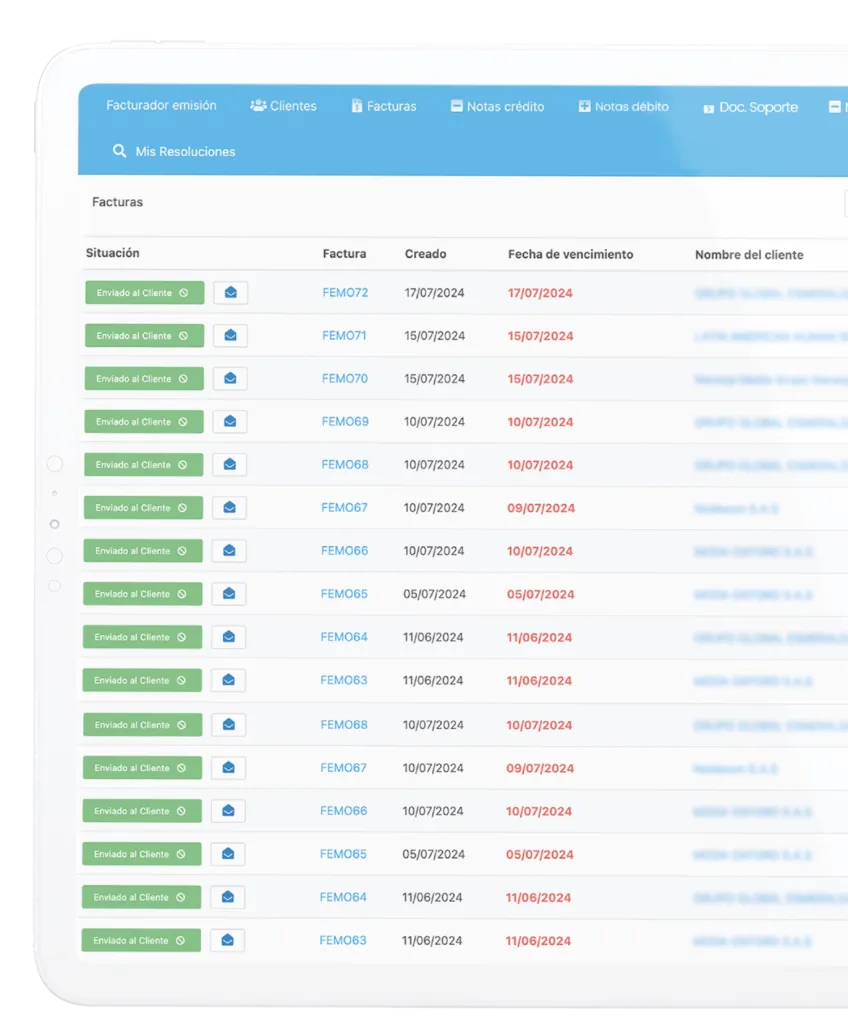
An electronic invoice is an XML invoice, digitally signed and validated by DIAN (Colombia's tax authority) before it reaches your customer. Anyone who sells goods or services and must invoice is required to use it; individual merchants must comply once they exceed 3,500 UVT in gross annual income, or regardless of income if they are registered for VAT, INC or the Simple Regime.
Electronic invoicing is how businesses invoice in Colombia today: the invoice stops being a piece of paper and becomes a file that DIAN, the national tax authority, validates. Here are short answers to the questions businesses ask us most when they are getting started.
What is an electronic invoice?
It is a sales invoice generated as an XML file, digitally signed and validated by DIAN before it reaches your customer. Along with the XML, your customer receives a PDF representation with a QR code, which is what they see and can print if they want.
Every validated invoice has a CUFE (Unique Electronic Invoice Code), which identifies it before DIAN and lets anyone look it up.
Who must issue electronic invoices?
In general, all individuals and companies that sell goods or provide services and are required to invoice under DIAN rules.
For individual merchants there is an income threshold:
- They must issue electronic invoices once they exceed 3,500 UVT in gross annual income. With the 2026 UVT at COP 52,374, the threshold is COP 183,309,000.
- If you are registered for VAT, for INC (national consumption tax) or in the Simple Regime, you must invoice electronically regardless of income.
How do I confirm whether it applies to me?
Check your RUT (Colombia’s tax registration). If it lists responsibility 52 (electronic invoicer), you are already required to comply. If in doubt, an advisor can review your RUT with you and tell you what applies.
Which regulation governs it?
The core rule is DIAN Resolution 000165 of 2023, amended by Resolution 000202 of 2025, together with Decree 1625 of 2016 (the single regulatory decree on tax matters). DIAN’s technical annex defines the XML format and changes over time, so it pays to use software that is updated with every change.
Two changes from Resolution 000202 of 2025 worth knowing
- Buyer details: if your customer is not found in DIAN’s lookup service, you may only ask for three details: name or company name, ID type and ID number. You cannot require their RUT.
- Rural contingency: in rural or hard-to-reach areas, you have up to 48 hours to transmit the invoice to DIAN.
What other electronic documents exist?
The invoice is not the only document. Depending on your operation, you may need:
- Credit and debit notes: they correct or cancel, fully or partially, an invoice already issued. A validated invoice cannot be deleted: it is cancelled with a credit note.
- Support document for purchases from parties not required to invoice: it backs your purchases from suppliers who do not invoice, so you can deduct that cost.
- Electronic POS equivalent document: the electronic version of the POS ticket for sales to end consumers, also governed by Resolution 000165 of 2023.
How long must I keep invoices?
DIAN requires you to keep them for at least 5 years. Cloud software keeps them stored so you can look them up whenever you need them.
What happens if I am required and do not invoice electronically?
DIAN may impose penalties under the Tax Statute, ranging from fines to the temporary closure of the business. In addition, your customers cannot support costs and deductions with invoices that are not electronic, which makes you less competitive.
Can I use DIAN’s free invoicing tool?
Yes. DIAN’s free solution covers the basics and you operate it on your own. An authorized technology provider such as e-Misión adds guided enablement, the digital signature, automatic delivery to your customer, reports, integration with your system and support from real people.
If you already know you must comply, the next step is getting enabled: we explain it in how to get enabled as an electronic invoicer with DIAN, step by step. To see how the invoicing app works, visit electronic invoicing (in Spanish).
Frequently asked questions
What is electronic invoicing in Colombia?
It is DIAN's system that replaces paper invoices. Each invoice is generated as an XML file, digitally signed and validated by DIAN before it reaches the customer.
Who must issue electronic invoices?
In general, individuals and companies that sell goods or provide services and are required to invoice. Individual merchants must comply once they exceed 3,500 UVT in gross annual income, or regardless of income if they are registered for VAT, INC or the Simple Regime.
How do I know if I am already required to comply?
Check your RUT (tax registration): if it lists responsibility 52 (electronic invoicer), you are already required to issue electronic invoices.
Which regulation governs electronic invoicing?
DIAN Resolution 000165 of 2023, amended by Resolution 000202 of 2025, together with Decree 1625 of 2016.